Why Your SA Business Website Isn't Getting Traffic

25 SA business website builds later — here's what the data actually reveals about why most sites don't get found.
Every week I have some version of the same conversation. A business owner tells me they have a website — sometimes brand new, sometimes two years old — and it's getting no traffic. No calls from it. No enquiries. It just sits there, live on the internet, doing nothing. After building websites for 25 South African businesses across Boksburg, Gauteng, and beyond, I've started to recognise the patterns. The problems are almost never mysterious. They're almost always the same things. Here's what I keep finding.
Your Meta Data and Keywords Are Probably Wrong

Your meta title is the first thing Google — and your customer — reads about your site.
When someone tells me their website isn't bringing in traffic, the first place I look isn't their design or their social media. I open their meta title.
Most SA business websites have something like "Home — Company Name" as their meta title. That's the first thing Google reads about your site in the search results. It's also the first thing a potential customer sees before deciding whether to click. And it says almost nothing about why they should.
The meta description is often worse. If there is one at all, it tends to read like a company brochure — professional, forgettable, and completely empty of any reason to choose you over the four other results sitting next to yours on the page.
The fix really isn't complicated:
- Your meta title should say what you do and where you do it. "Electrical Contractor Johannesburg | Emergency Callouts Available" tells Google and your visitor exactly what they're landing on.
- Your meta description should give someone a reason to click yours over everyone else's — not just describe what your business is.
- Your keywords need to match the words your actual customers type into Google, not the language you use when you talk about your own business internally.
One afternoon fixing the meta data on your five most important pages will do more for your traffic than months of social media posting.
But there's something even more basic that most guides never mention — and it's the thing that frustrates me most when I come across it.
Some websites aren't getting traffic because Google has never seen them. Not "doesn't rank them well." Has never seen them at all.
A site can look great, load fast, have real content — and still be completely invisible in search because nobody ever submitted it to Google. Google Search Console is free. It's Google's own tool. It lets you verify your site, submit your sitemap, and confirm that Google is actually finding and reading your pages properly. I've worked with clients who had been "live" for months with zero search visibility. We submitted their site, requested indexing, and within days they started showing up for the first time. It wasn't clever strategy. It was just opening the front door and telling Google the business was there.
A Generic Website Will Never Rank
This is the one that's hardest to say, but I've seen it too many times to stay quiet about it. If your website looks and sounds like every other website in your industry, Google has no real reason to rank it above the others.
A layout full of stock photos of handshakes and smiling teams. Copy that says "we deliver quality service with a personal touch." Services listed in bullet points with no explanation, no story behind them, no actual perspective on anything. I've seen what is essentially the same website built by twenty different businesses, just with the company name swapped at the top.
Google has indexed millions of websites. It isn't looking for a reason to rank yours — it's looking for a reason to rank yours above the others. If yours offers nothing different, no specific knowledge, no local context, no genuine voice, it won't find one.
The SA businesses I've seen do well in search are not always the most polished. They're the most specific. A plumber in Germiston who wrote honestly about why you should never DIY a burst geyser in winter. A florist in Alberton who documented how load shedding forced her to rethink her cold storage and what she changed. Real, specific, original — the kind of content only that particular person could have written. That's what Google notices. That's what customers remember.
Nobody tells you when your website isn't indexed. It just sits there, invisible, while you wonder why the phone isn't ringing.— Tsundzuka Mlati, Elamilanga Web Design
Quality Backlinks Beat Quantity Every Time

One quality link from a credible SA source carries more weight than a hundred from random directories.
A backlink is when another website links to yours. Google treats it as a vote of trust — the more credible the site linking to you, the more weight it carries.
Most SA businesses either ignore this completely, or someone tells them they "need more links" and they end up paying for a bulk package from random, irrelevant directories. Neither approach does much.
What actually works in the South African context:
- Get listed in legitimate SA directories — Brabys, SAYellow, BusinessList.co.za. Low effort, and they count.
- Put your expertise somewhere people can reference it — a guest article for an industry publication, a useful answer in a relevant forum, real advice in a community Facebook group. When people find it useful, they link back to you.
- Talk to your suppliers and business partners — a hardware supplier mentioning a contractor on their website is natural, relevant, and valuable. Most people never think to ask.
One strong link from a credible SA news site or industry body is worth more than a hundred from irrelevant directories. It's a slow game. But it compounds over time, and it's the part of SEO most small businesses don't bother with — which is also exactly why it can separate you from the competition when you do.
You're Not Using the Platforms You Already Have
I know this can sound like I'm asking you to do more work. I'm not, really. I'm saying your business probably already has a Facebook page, a WhatsApp number, maybe an Instagram account — and those platforms are sending zero traffic to your website because nobody ever properly connected them.
Social media doesn't directly improve your Google ranking. But it puts real people on your website. And those visits — how long they stay, which pages they read, whether they come back — are signals Google notices over time.
In South Africa this matters more than most guides acknowledge. Data costs are still high relative to income. Most people browse on mobile. They spend a significant chunk of their time in Facebook groups, WhatsApp communities, and TikTok feeds. If your website link isn't accessible in those spaces, a large portion of your potential customers will simply never find it — regardless of how polished your site is.
- Link back to your website in your Facebook posts — not just once at setup, but regularly, in posts that are actually useful to your audience
- Short, honest TikTok videos about what you do and where you're based send more traffic than most people expect, and they don't need to be polished to work
- Your WhatsApp Business profile, your email signature, and every social bio you have should carry your website link — all of them, consistently
None of this replaces SEO. But it feeds it.
Your Google Business Profile Is Sitting Empty
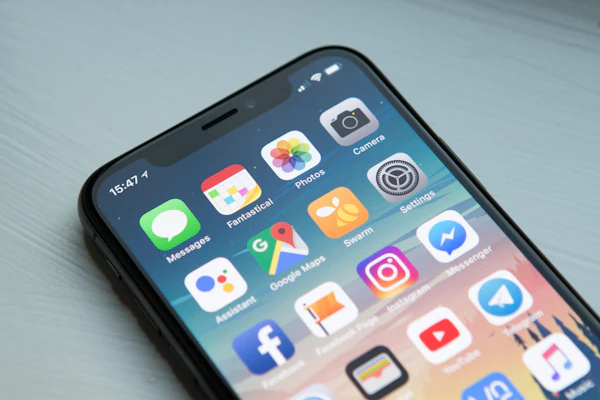
Google Business Profile is free, managed by Google, and actively rewards consistent posting.
This is the most underused strategy I keep coming across. In every SA industry I've worked in. And it costs absolutely nothing.
I had a client in a trade services business — exactly the kind of business that depends on local customers finding them. They had a website. They had a Google Business Profile. But the GBP was barely filled in and they weren't posting to it at all. We updated their pages to use industry-specific keywords and started posting to the GBP twice a week — a completed job, a useful tip, a photo. Nothing elaborate, nothing polished.
Within three months their website started appearing in local search results they'd never shown up in before. Not because we did something clever. Because consistent GBP activity tells Google that this business is real, active, and worth showing to people searching in that area.
If you haven't claimed your Google Business Profile yet, or if it's sitting half-filled with no recent posts, that is the single most impactful free thing you can do for your local traffic right now.
The less glamorous the keyword, the less competition. The less competition, the faster you rank.— Tsundzuka Mlati, Elamilanga Web Design
You're Going After Keywords Nobody Can Win
"Website design" gets searched millions of times a month. You won't rank for it next week. Probably not next year, if you're a small business competing against established agencies and international platforms that have been building authority for years.
"Website design for electricians in Pretoria" gets searched far less. But the person typing that is ready to buy. And there's almost nobody competing for that exact phrase.
The shift that actually moves the needle for most SA businesses is from chasing broad keywords to owning specific ones. Think about who your actual customers are right now. What exactly are they searching for? What problem are they trying to solve? What city or suburb are they in when they search?
I've seen small businesses go from zero organic traffic to consistent enquiries just by getting precise about who they serve and writing a page or two aimed directly at that person. Not by running ads. Not by redesigning the site. Just by targeting the right keywords instead of the impossible ones.
Your One-Page Website Has a Structural Ceiling
If you have a one-page scrolling website, this isn't a criticism — it's something worth understanding before you spend time wondering why organic traffic is limited.
A single page can only realistically rank for a small number of keywords. One URL, one title tag, one set of headings. Google reads it and files it under one or two topics. That's the ceiling, and there's no way around it without adding more pages to your site.
A multi-page site — where each service, each location, each common question gets its own dedicated page — gives Google many more entry points. Each page can rank for different keywords. Each page answers a different question. More pages means more chances for a potential customer to find you.
For brochure sites and portfolios, a single page often makes complete sense. But if sustained organic traffic is a genuine business goal, it's worth building a structure that actually gives Google something to work with.
What to fix first
- Submit your site to Google Search Console — verify ownership, submit your sitemap, and request indexing. If Google can't find your site, nothing else on this list will make a difference.
- Fix your meta titles and descriptions on your five most important pages — make them specific, keyword-relevant, and give people an actual reason to click.
- Claim and properly fill in your Google Business Profile — add photos, complete every field, and write your first post today. Make it a habit twice a week from there.
- Write one piece of content only you could write — a real story, a lesson from a job, an honest take on something your customers consistently get wrong.
- Get listed in three SA directories you're not already in — Brabys, SAYellow, BusinessList.co.za are the starting point.
- Put your website link everywhere you already exist online — WhatsApp Business, email signature, every social media bio. Every single one.
Ready to build a website that actually gets found?
If your site isn't bringing in enquiries, it may not be a traffic problem — it may be a foundation problem. Let's talk.